Start with where the car parks
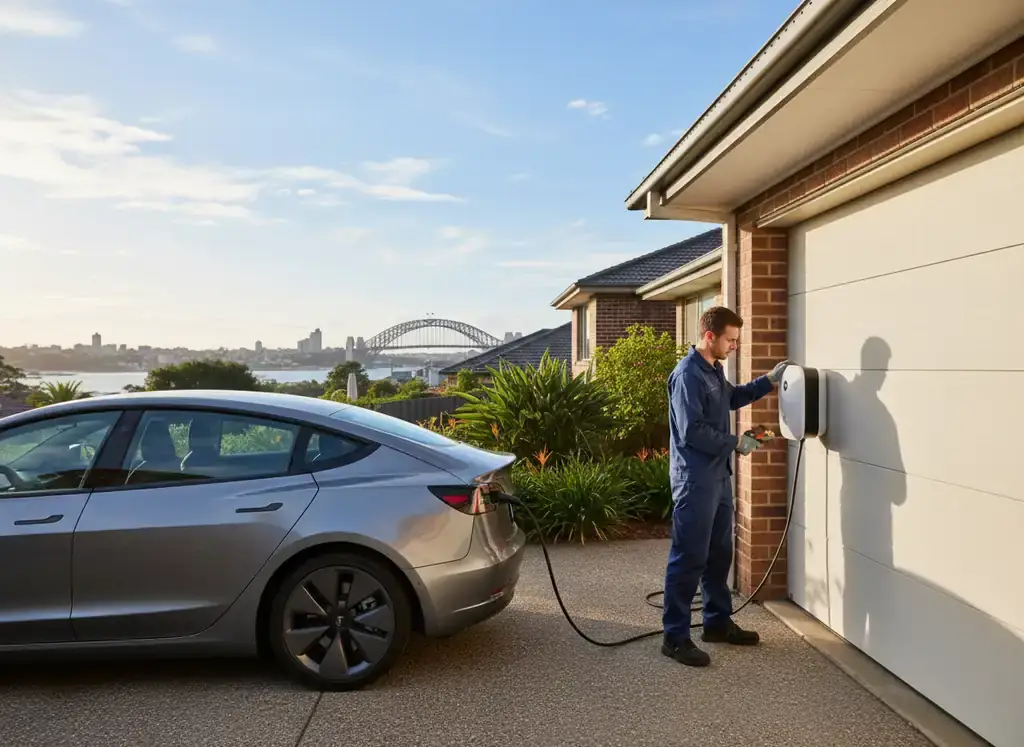
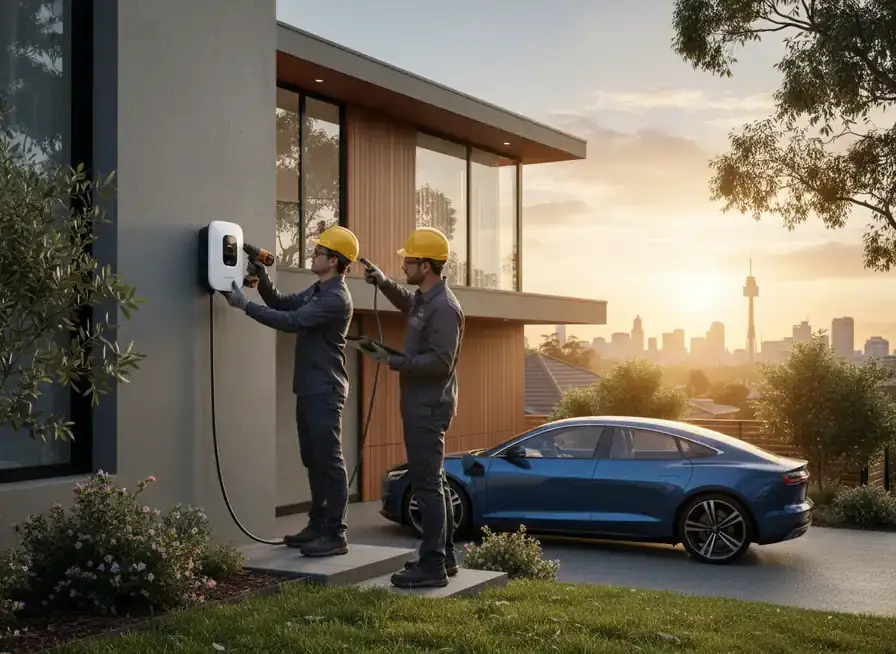
A freestanding house or townhouse with its own garage or carport usually points to a standard home EV charger installation. The charger mounts on a wall or post close to the parking spot, and the cable run goes back to your own switchboard.
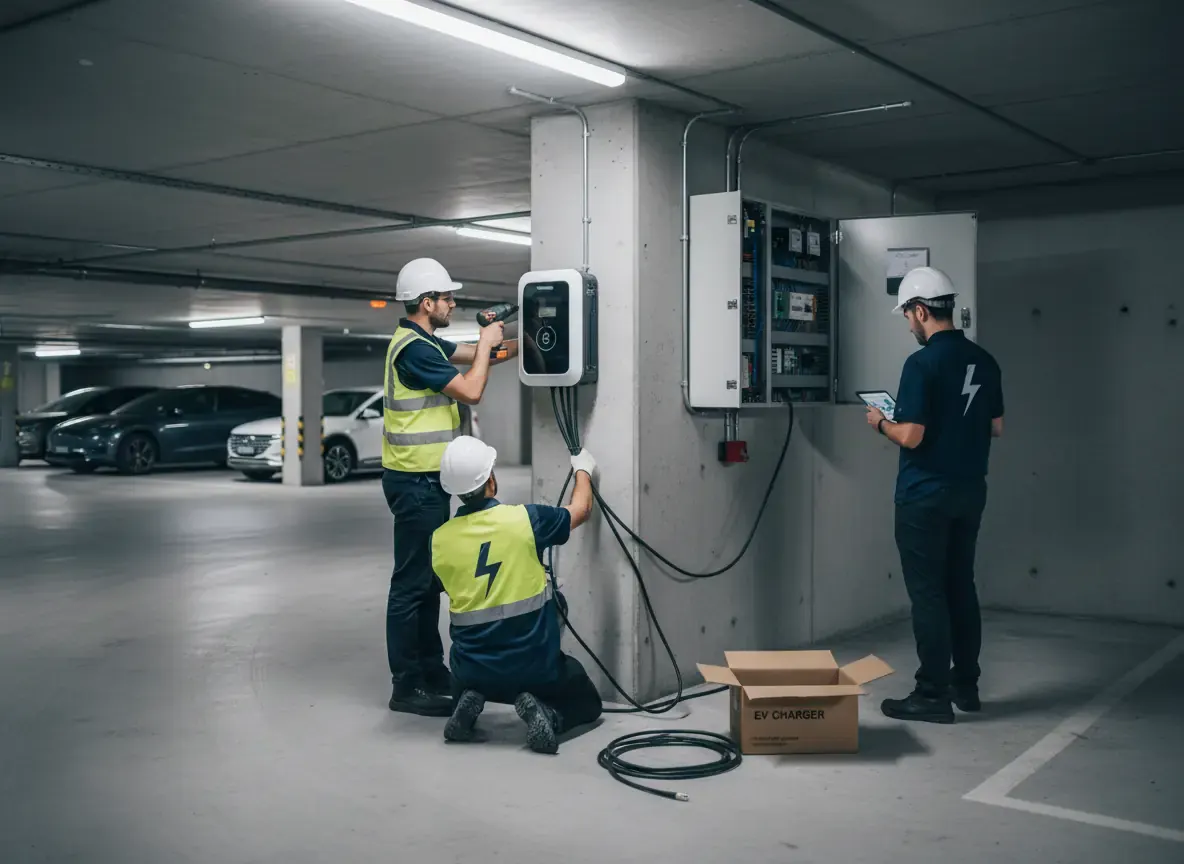
Apartments and strata blocks are different. The car space often sits in a shared basement, the supply may come from a common board, and the owners corporation usually has a say in how cabling crosses common property. If that sounds like your building, apartment and strata EV charging is the place to start.
Match the charger to your car and habits
Tesla owners
If you drive a Tesla and want the matching wall unit, Tesla Wall Connector installation covers mounting, cabling and setup for that specific charger.
Scheduling and app control
A smart EV charger suits drivers who want to set charging times, track energy use from a phone or shift charging into cheaper tariff windows. Most brands work with most cars, so the choice is usually about features rather than compatibility.
Whatever you pick, choose a charger that carries the Regulatory Compliance Mark, which shows it is approved for sale in Australia.
Check the power supply at your home
Single or three phase
Many Sydney homes run on single phase power, which handles everyday overnight charging well. If your property already has three phase supply, or you want faster charging for a larger battery, a three phase EV charger installation makes better use of it.
When the switchboard needs work
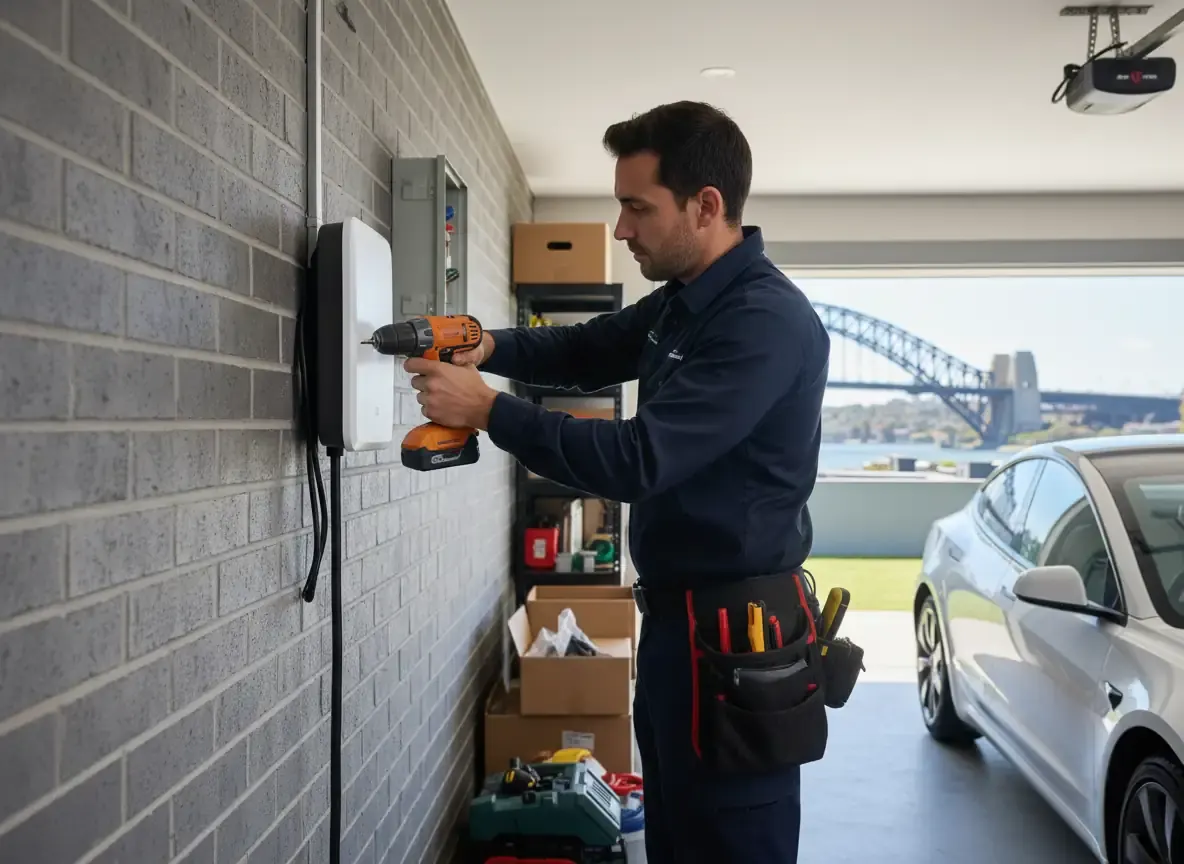
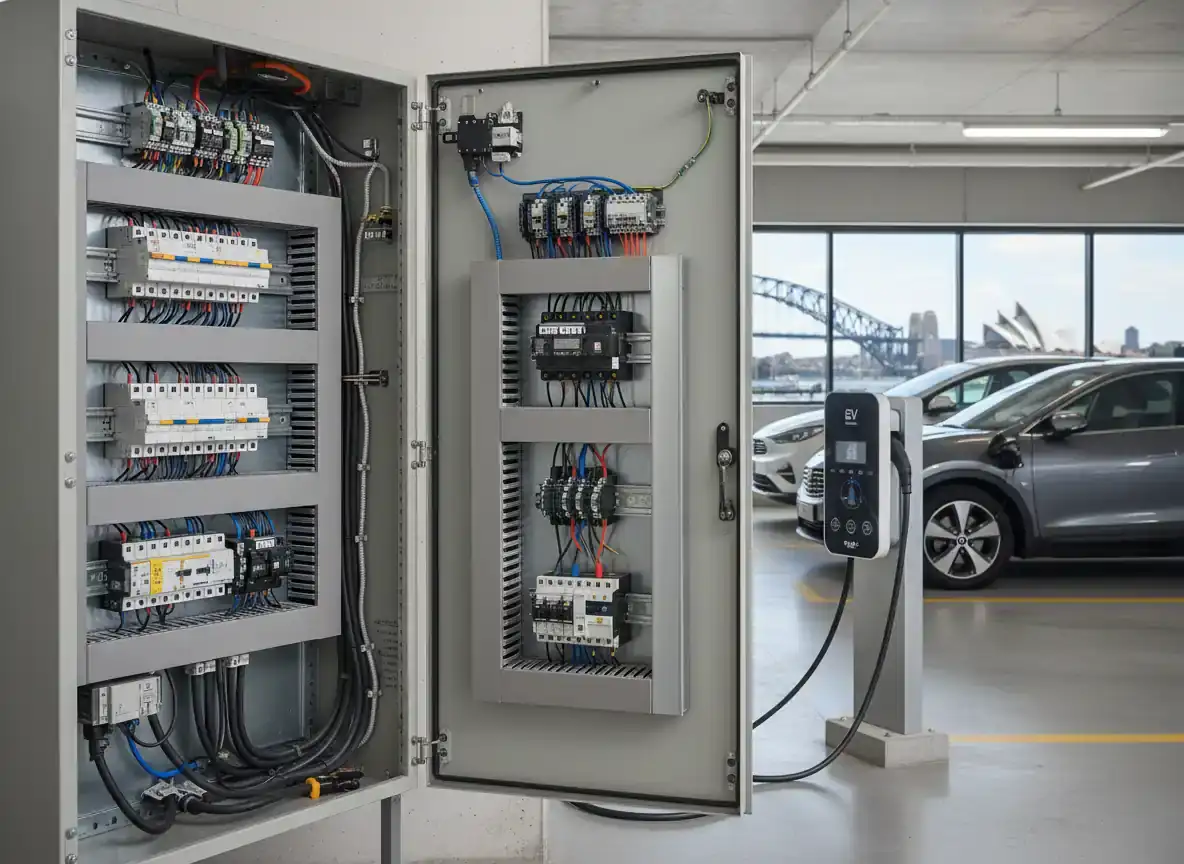
Older homes, particularly those with ceramic fuses or a full board, may not have room or capacity for a dedicated charger circuit. A switchboard upgrade for EV charging brings the board up to the job first, so the charger and your existing appliances can run safely together.
Thinking about solar
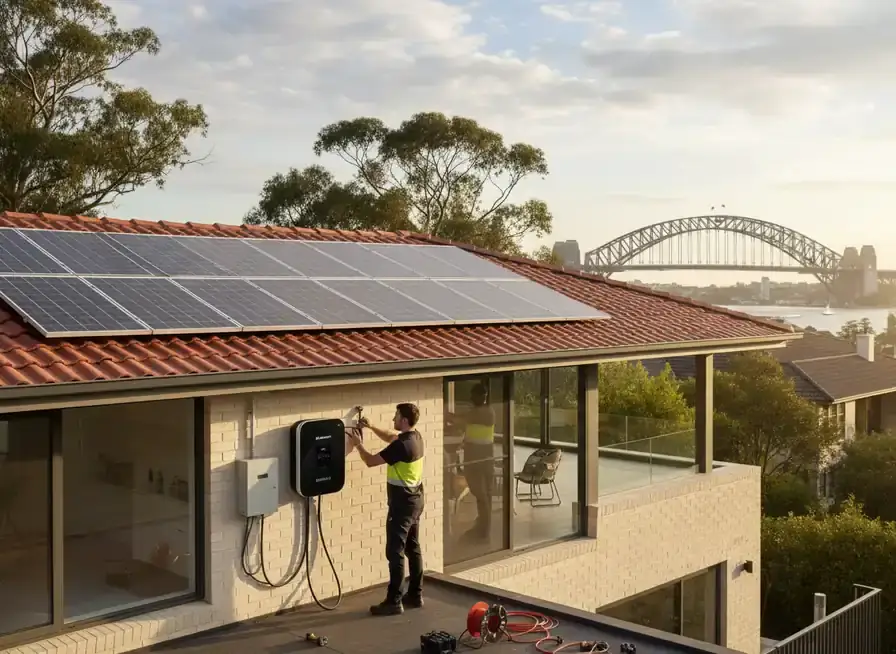
If you have panels on the roof, or plan to add them, solar EV charger integration lets the charger soak up surplus daytime generation instead of sending it back to the grid. It works best when the car is home during the day, so weekend or work from home patterns matter here.
Approvals and paperwork worth knowing
A home charger in NSW generally needs no council approval when it meets every exempt development requirement under the Transport and Infrastructure SEPP, including following the maker's specifications and the relevant Australian Standards. If it falls outside those requirements, another pathway such as a development application applies. Any cable or unit on a footpath or road reserve needs consent from the roads authority.
Once the charger is in, the installer must test the work and lodge a Certificate of Compliance for Electrical Work through BCNSW eCert within seven days. Ask for a copy for your records.
For larger jobs, such as a charger combined with a switchboard upgrade, a written contract is required once the work passes $5,000 including GST, and the deposit cannot exceed 10% of the contract price.
Narrowing it down
Before choosing a service, note four things: whether you park in a private garage or a shared car park, the make of your car and charger, whether your meter box shows single or three phase supply, and whether solar is already on the roof. With those answers you can request a quote here and a licensed and insured local contractor can follow up about the right setup for your home.